WHAT’S NEW
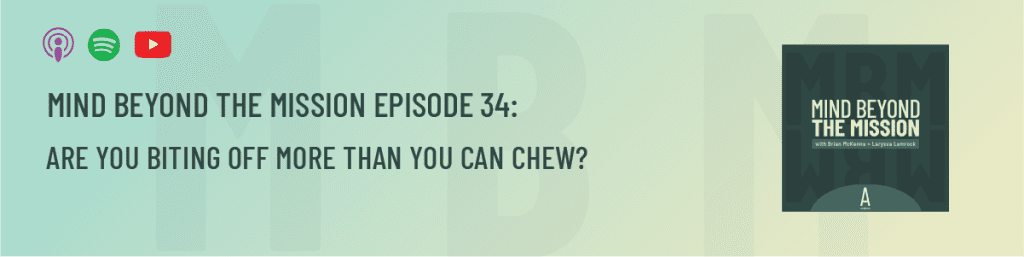
Mind Beyond the Mission
Are you biting off more than you can chew?
In a new podcast episode, hosts Brian McKenna and Laryssa Lamrock look at what it feels like to “bite off more than you can chew” — an experience that resonates deeply with many Veterans, Family members and caregivers. Drawing from their own stories, they discuss how quickly overwhelm can build and snowball when you’re supporting someone you care about while also managing your own mental health. They share practical insights on how to empower those around you and recognize the signs that you may be carrying more than you should.
Some topics they explore:
- The challenges around supporting others while managing your own mental health
- The importance of boundaries and maintaining a personal “reserve”
- Strategies to empower others to support themselves instead of doing everything for them
- The significance of small tasks accumulating into overwhelming responsibilities

Perspectives
Finding happiness in the chaos: A spouse’s perspective on posttraumatic stress disorder
“We realized that living a real-life fairy tale wasn’t about ‘happily ever after.’ It was about choosing each other through the storms, fighting the beast in the shadows together and learning to find happiness not after the storm and the chaos, but within it.”
What does it mean to love someone living with posttraumatic stress disorder (PTSD)? In a new Perspectives blog post, a Veteran spouse looks back at her 20-year “real-life fairy tale” — a love story shaped by the realities of military life and the invisible challenges of living with PTSD. She describes the glimpses of hope that helped her keep going through the darkest chapters, reflecting on the resilience her Family has fostered and the fairy-tale life they’ve built together over the years.


EVENTS AND TRAINING
January 22 – 23, 2026 — Last chance to register for the Veteran Family Summit!
As they navigate the impacts of their loved one’s service, Families deserve a space where their needs and experiences can be truly understood. The Veteran Family Summit was created to acknowledge, support and provide resources specific to the unique needs of Canadian Veteran Families. Registration will provide you with early access to virtual resource booths and a library of information unique to your needs, along with all the summit recordings and much more. You can join each of the live presentations that are of interest to you and check out the rest of the summit whenever it’s convenient.
February 2 and 4, 2026 — RCMP Veterans: Mental health dialogue virtual sessions (Francophone Veterans and general session)
Are you a Royal Canadian Mounted Police (RCMP) Veteran (former member)?
Atlas is hosting two upcoming virtual dialogue sessions to explore RCMP Veteran and Family needs and perspectives relating to mental health. To ensure our future work is reflective of the needs of the community, we need to hear directly from its members.
Through facilitated discussion questions, developed with RCMP Veteran input, these dialogue sessions will explore experiences and perspectives relating to mental health to identify research priorities, knowledge needs and areas of public policy action.
These sessions will conclude a series of conversations that took us to Moncton, NB and Edmonton, AB earlier in 2025 and included sessions to hear about the unique experiences of RCMP women Veterans and of RCMP Family members.
Once the dialogue series is completed, we will summarize what we heard into a public report so all organizations working in the area of RCMP Veterans and Family mental health can better understand the needs of the community and potential focus areas for future efforts.
Our next two dialogue sessions will be held in February via Zoom. The February 2, 2026 session will focus on the unique needs and experiences of Francophone Veterans. The February 4, 2026 session will be open to all RCMP Veterans who were not able to join us at previous in-person or virtual sessions.
Event details
For Francophone RCMP Veterans
Date: February 2, 2026
Time: 12 – 2 p.m., Eastern time
Location: Zoom
Language: This session will be facilitated in French
For all RCMP Veterans
Date: February 4, 2026
Time: 12 – 2 p.m., Eastern time
Location: Zoom
Language: This session will be facilitated in English
Please note that spaces are limited.
SELF-PACED TRAINING
Managing problematic anger
Trauma-exposed professionals training
EVENT AND TRAINING CALENDAR
Veteran Family Summit
RCMP Veterans: Mental health dialogue session
FEATURED RESOURCE

Guide to moral injury for Veterans and Families
“I suffered from shame and guilt for the actions I took based on orders. For a long time I was confused and very self-critical. Discovering that moral injury is part of my condition allowed me to accept what happened and begin healing.”
— Voice of a Veteran
“I felt helpless as I watched guilt, shame, inner conflict and distress slowly erode his being, and I began to suspect that something more than PTSD was happening.”
— Voice of a Veteran Family member
Moral injury is a type of psychological injury that can happen when a person does, witnesses or fails to prevent something that conflicts with their own deeply held moral beliefs and values. It can result in intense feelings of guilt, shame or betrayal. Moral injury can affect both Veterans and their Families.
If you are experiencing moral injury because of things that happened during service — or you are navigating the impact of moral injury on a loved one — learning about it can be an important first step toward processing what happened and toward healing.
Download our guide for Veterans and Veteran Family members for more information on what moral injury is, how it is different from PTSD and tips for what to do if you think you are experiencing moral injury.
Interested in learning more about moral injury?
RESEARCH HIGHLIGHTS
Recruiting study
Feasibility and acceptability of attention control training for Veterans
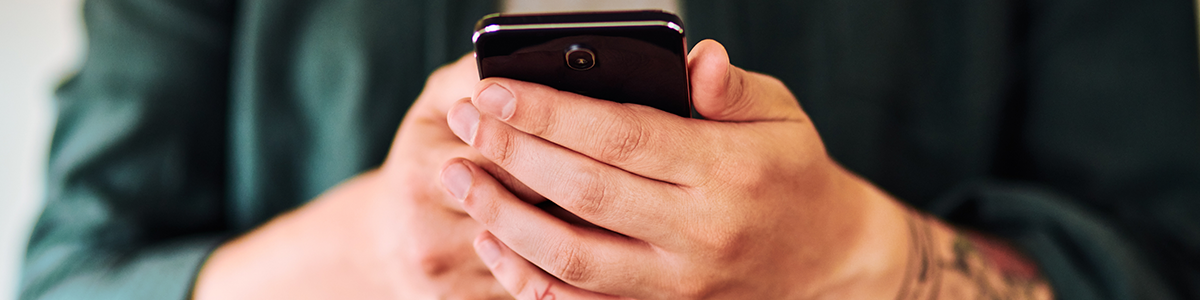
Seeking Canadian Armed Forces (CAF) Veterans who have transitioned out of military service in the last five years! MacDonald Franklin OSI Research Centre, Phoenix Australia and the Atlas Institute for Veterans and Families are currently running a feasibility and acceptability study on attention control training for Veterans.
The purpose of this project is to test the usability of a brief computerized task delivered to your mobile phone, via a web app. This research uses the Attention Control Training app (ACT-app) to help retrain attention patterns, encouraging a better balance between noticing both threatening and non-threatening cues. The goal is to understand whether this type of mobile task is usable, acceptable and potentially helpful for Veterans.
Participation involves filling out a short questionnaire, completing 10 quick training sessions over three weeks and finishing by completing a final questionnaire. Every aspect of the study will be completed on a mobile phone. No in-person visits are required.
Recruiting study
Study participation opportunity: Cannabis use among Veterans with PTSD or operational stress injuries
Veterans’ use of cannabis to manage symptoms of PTSD has been steadily increasing since 2014. Research is needed to help Veterans and their health care providers better understand the optimal use of cannabis for medical and therapeutic purposes.
Atlas has partnered with researchers from the University of Ottawa to better understand how cannabis helps Veterans manage the symptoms of PTSD or an operational stress injury (OSI). We are looking for study participants who are CAF Veterans who have lived with PTSD or an OSI to complete an online survey.
Participants must be Canadian residents and have lived with PTSD or an OSI at any time since March 2020 (even if you do not currently experience any symptoms).
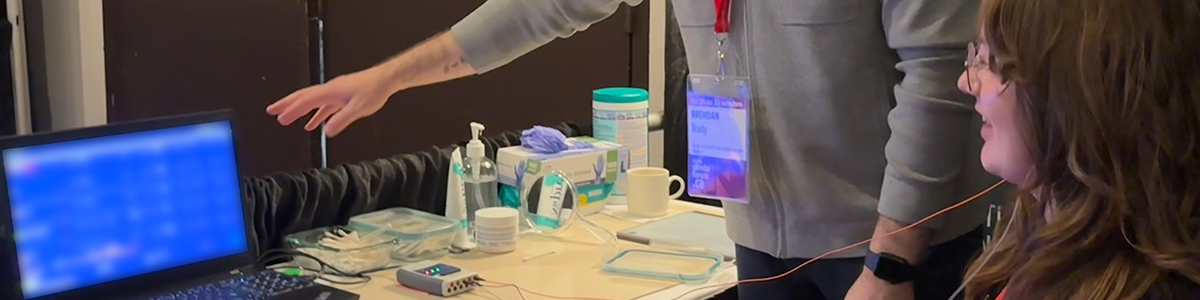
Neurofeedback therapy in action at CIMVHR Forum 2025
In October, the Atlas Clinical Research team had the opportunity to offer a live demonstration of neurofeedback therapy at CIMVHR Forum 2025. As we look back on the experience, we are taking the opportunity to share some information on this treatment, based on the conversations with and questions from demonstration participants.
What is neurofeedback? Neurofeedback is an emerging brain-based training approach being explored for a variety of mental health disorders, including PTSD. It works by measuring your brain activity in real time and translating it into feedback, often in the form of a game or visual display that responds to what your brain is doing. Over repeated sessions, you learn to change your brain activity by adjusting your thoughts, attention or mental strategies, with the goal of improving self-regulation.
How does this therapy reflect into everyday habits and behaviours? The idea of neurofeedback is that you learn to change your thinking patterns through self-regulation. Over time, those thinking patterns become more natural. A simple way of describing it is that it’s like going to the gym and lifting weights, but for your brain! When you pick up a weight at the gym, you feel resistance and how heavy it is. The more you lift that weight, the more you build muscle and it becomes easier to lift. Even after you leave the gym, the strength you have built carries over into everyday life.
Neurofeedback works in a similar way. During training, you rely on the feedback from the game or visual display to understand how your brain is responding. With repeated practice, you strengthen the neural pathways involved in these new patterns of thinking and attention. The skills you practise during neurofeedback can then begin to carry over into everyday situations.
What are some common misconceptions about neurofeedback? A common misconception is that we are able to read people’s thoughts, which is entirely false! Neurofeedback does not decode thoughts. Instead, it measures general patterns of brain activity, such as levels of engagement or relaxation, and presents this information to you in a simple visual form. You are the one modifying your brain activity through practice, not the device. The device only shows you what your brain is doing in real time so you can learn how to adjust it.
PARTNERSHIP AND STAKEHOLDER SPOTLIGHT
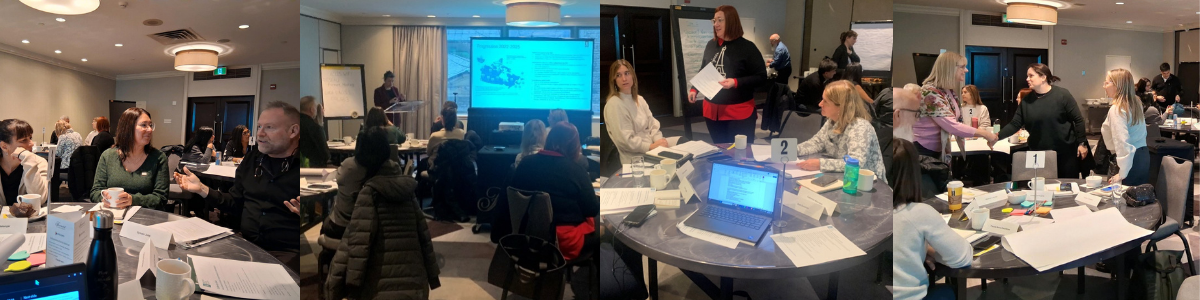
Roundtable on the health and well-being of Francophone Veterans and their Families
On December 2, 2025 in Montréal, QC, the Atlas Institute held the first-ever Canadian roundtable on the health and well-being of Francophone Veterans and their Families. This milestone was three years in the making, beginning in 2022 with exploratory conversations and outreach with Francophone organizations in Quebec. That work culminated in last month’s gathering of 12 organizations and 20 key stakeholders.
The three-hour roundtable brought together CAF and RCMP Veterans, Family members, clinicians, researchers and service providers. André Lauzon, PhD opened the discussion with emerging research data on Francophone Veteran experiences from a study on thriving after service. This was followed by rotating small-group discussions on access to care, clinical tools, capacity and next steps.
Key learnings
- Erasure: In pan-Canadian data, Francophone Veteran experiences are too often invisible, marginalized or aggregated into Anglophone narratives.
- Untapped expertise: Francophone experts exist, but they are not consistently engaged or called upon in national-level conversations.
- Ready to act: The network is eager and ready to work together toward concrete solutions.
Organizations present
- Canadian Institute for Military and Veteran Health Research
- Centre of Excellence on Chronic Pain
- La Fondation québécoise des Vétérans
- Le Sentier
- Military Family Resource Centre Montreal Region
- Operational Stress Injury Social Support — Quebec
- Quatre-Chemins
- RCMP Veterans’ Association — Quebec Division
- Ste. Anne’s Hospital Operational Stress Injury Clinic
- Soldiers Helping Soldiers
- Université Laval
- Veterans Transition Network
Stay tuned for a full report with proposed next steps in early 2026!
We want to hear from you!
What did you think of this newsletter? Are you a Veteran or Family member with a story to tell? Get in touch with us!
Get more updates
Join our mailing list to receive this monthly newsletter and regular updates about Veteran and Family mental health from the Atlas Institute for Veterans and Families.
Follow us on social media
© 2026 Atlas Institute for Veterans and Families
