WHAT’S NEW
New Report
Insights on transition and adjustment for women Veterans of the Canadian Armed Forces
“My first reaction to many of the results presented in the report was not one of surprise. it is so much of what I have heard from friends, colleagues and from other women Veterans that it didn’t feel like new information, but it was a confirmation of these things I had been hearing.”
— Tabitha Beynen, Master Corporal (Ret’d), Lived Experience Lead — Veterans, Atlas Institute for Veterans and Families
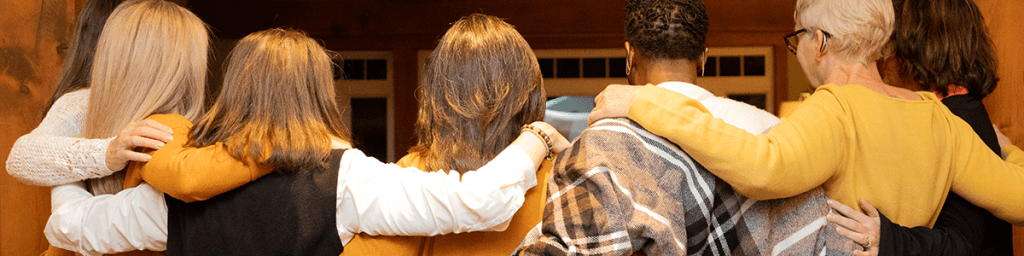
What are the experiences of women Veterans in the transition to post-military life? The Atlas Institute for Veterans and Families and the Canadian Legacy Project are pleased to share the findings of a recently completed study on the transition to post-service life and the well-being of women Veterans of the Canadian Armed Forces (CAF).
The results of this study reinforce that military transitions are complex and deeply personal processes shaped by individual, service-related and system factors. Supporting health through trauma-informed, gender-responsive and holistic programming is essential to fostering equitable and successful transitions for all women who have served in the CAF.
Thank you to the women who took the time to share their experiences in the context of this study. Your contributions can continue to support the enhancement of programs and services to meet the needs you identified.
COMING SOON
Guide for supporting Veterans with problematic anger
Look out for a new resource that will be available later this month for service providers supporting Veterans with problematic anger. Containing theoretical knowledge, case studies and quotes, reflection activities and more, this guide aims to provide professionals with practical and actionable tools to support Veterans experiencing problematic anger.
Did you know? The Atlas Institute offers a self-paced training course, developed in collaboration with Phoenix Australia, to equip clinicians with the skills to assess and treat military and Veteran populations experiencing problematic anger. The cost of this training is covered by Atlas for eligible service providers.

Mind Beyond the Mission
How can service dogs support Veteran healing? A conversation with John Dugas
In a new episode of Mind Beyond the Mission, hosts Laryssa Lamrock and Brian McKenna are joined by John Dugas, a CAF Veteran and certified service dog trainer who pairs Veterans and first responders with specially trained, certified service dogs.
Their conversation highlights the powerful bond between humans and dogs and the role that compassion, structure and trust can play in recovery. They look at the key differences between service dogs and pets and shed light on important considerations for Veteran Families considering a service dog.

Perspectives
The first step: Accepting my injury
“Accepting my injury and my responsibility for the damage I did at home and at work wasn’t the whole effort, it was the first step — a critical first step. It opened the door to more growth, acceptance, healing and
love.”
In a new Perspectives blog post, Sergeant (Ret’d) Christopher Banks looks back at his transition out of the CAF and the hypervigilance that followed him into his retirement. He shares his experience of living with multiple mental health injuries and how he moved on from denial and anger to starting to accept what he and his Family were facing.
His story emphasizes how untreated mental health injuries can affect Veterans and their Family members and why acceptance is often the first step toward healing.

EVENTS AND TRAINING
SELF-PACED TRAINING
Managing problematic anger
Trauma-exposed professionals training
RESEARCH HIGHLIGHTS

Recruiting study
Reproductive and mental health of women Veterans in Canada and the United Kingdom
Military and policing service can have unique impacts on women’s health, including their mental and reproductive health. Sharing your experience will help to generate long-awaited evidence on this topic in Canada and the United Kingdom. The Atlas Institute has partnered with the Centre for Military Women’s Research at Anglia Ruskin University to explore and compare the mental and reproductive health of women Veterans of the Canadian and UK militaries, Royal Canadian Mounted Police and UK police. Participation involves filling out a one-time online survey that allows completion in multiple sessions. The survey will take approximately 30 minutes to complete.
To participate, you must be:
- A woman (female sex at birth) Veteran of the Canadian or UK military, or former uniformed member of the Royal Canadian Mounted Police or UK police
- Aged 18+
- Comfortable reading and writing in either English or French
- Living in Canada or the UK
You will be asked questions on reproductive health touching on topics such as fertility, contraceptive use, menopause, sexual health and mental health. Participate to help us better understand this important issue affecting women Veterans and to support recommendations for further research or health care practice and policy! We also encourage you to share this study with your fellow women Veterans.
A comparative study exploring the reproductive health and health needs of women Veterans in Canada and the United Kingdom
Principal Investigator: Dr. Claire Hooks
Collaborators: Dr. Lauren Godier-McBard, Dr. Sara Rodrigues and Dr. Kate Hill MacEachern
Anglia Ruskin University Ethics and Research Integrity Committee ETH2425-6163
The Royal’s REB #0337
Version 2, January 26, 2026

Recruiting study
An exploratory study of the sleep health of Canadian Veterans and their Families
Calling Veteran Family members! We need to hear from you. Atlas is conducting a study to better understand how Veterans and their Families experience sleep. Recruitment is well underway, but we need to hear from more Family members!
We know that sleep problems are highly prevalent in Veterans for a multitude of reasons and that they often occur alongside many mental health conditions. However, there is limited knowledge about the sleep experiences, quality and outcomes of these experiences on Canadian Veterans and consequently on their Family members. The results of this study will allow us to better understand the factors associated with sleep health, how sleep impacts daily activities, what health, behavioural and environmental factors are associated with sleep quality in Veterans, and what should be captured in sleep health resources.
Led in collaboration with a Veteran who sought to ask the questions that weren’t being asked, the survey will ask questions about your sleep habits, routine and quality, as well as about your information needs when it comes to sleep health. Participation involves filling out a one-time online survey that should take about 30 minutes to complete.
An exploratory study of the sleep health of Canadian Veterans and their Families
Principal Investigators: Kate Hill MacEachern, PhD and Tabitha Beynen
Royal Ottawa Health Care Group REB#269
Version 1, January 9, 2025
New publication
Augmenting evidence-based PTSD psychotherapy with neuroscientifically informed interventions: A mind-body-brain approach
A newly published special issue of the Journal of Military, Veteran and Family Health on measurement-based care and approaches to treatment resistance includes four publications co-authored by various Atlas Institute team members. Among these four papers is a research article titled Augmenting evidence-based PTSD psychotherapy with neuroscientifically informed interventions: A mind-body-brain approach, co-authored by Dr. Andrew Nicholson, Vice-President of Research at Atlas.
This study:
- Explored treatment interventions guided by neuroscientific advancements, specifically deep brain reorienting, virtual reality integrative therapy, neurofeedback and non-invasive brain stimulation.
- Identified that the concept of treatment-resistant posttraumatic stress disorder (PTSD) should be reevaluated in light of new therapeutic approaches which offer a path towards more effective, individualized treatment.
These findings show that these treatments show promise in augmenting outcomes associated with therapies recommended in clinical practice guidelines by directly targeting some of the mind-body-brain mechanisms underlying PTSD symptoms.
COMMEMORATIONS CALENDAR
| March 8 | International Women’s Day |
We want to hear from you!
What did you think of this newsletter? Are you a Veteran or Family member with a story to tell? Get in touch with us!
Get more updates
Join our mailing list to receive this monthly newsletter and regular updates about Veteran and Family mental health from the Atlas Institute for Veterans and Families.
