- 2026-03-11
- Blog
A presence at the table — and the podium: Why Veteran voices matter in research
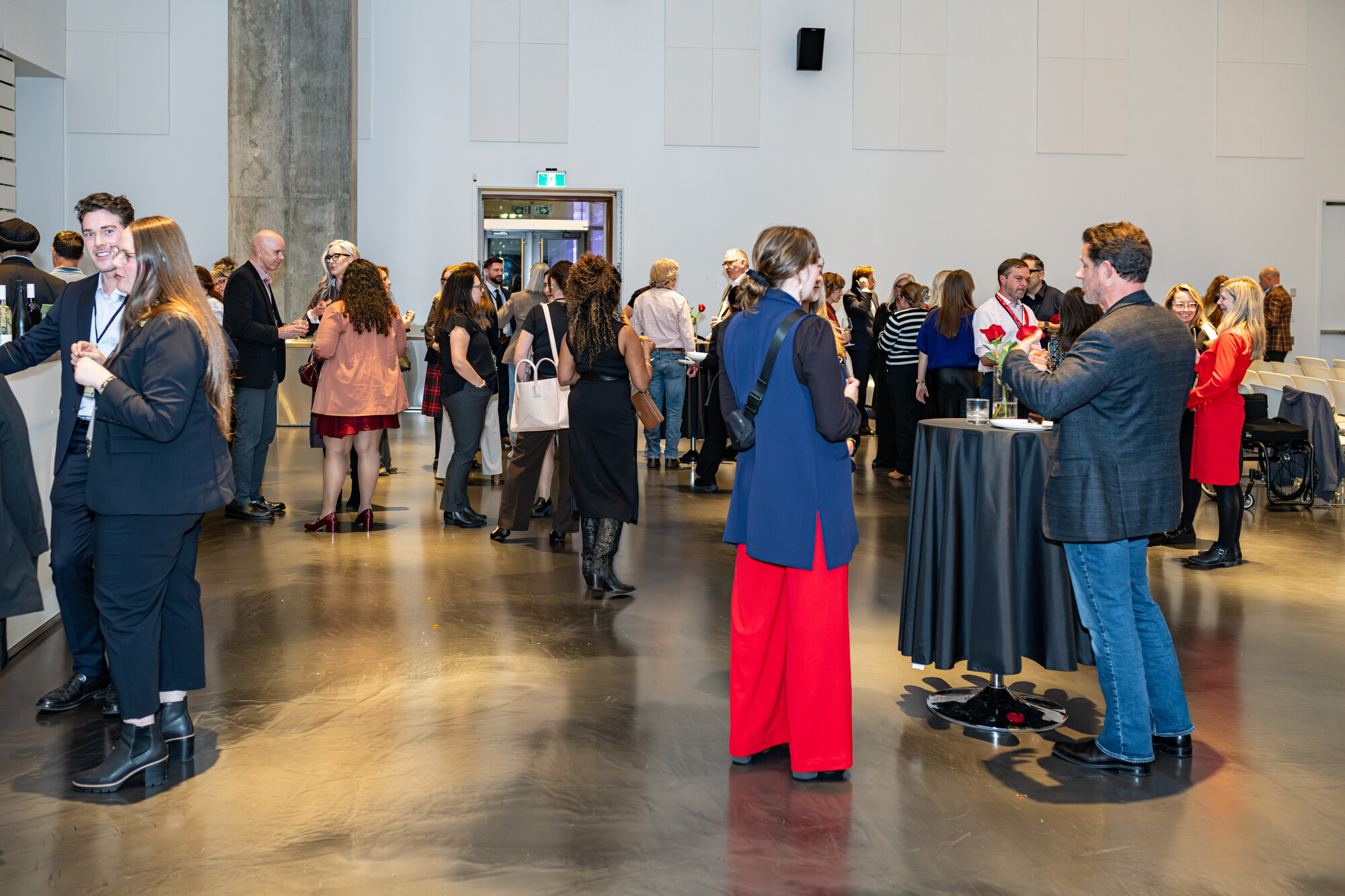
Meet Corporal (Ret’d) Sarah Lefurgey, a Royal Canadian Mounted Police (RCMP) Veteran who has become deeply engaged in Veteran-related research since retiring from the force in 2020. When she attended the Canadian Institute for Military and Veteran Health Research (CIMVHR) Forum in 2023 as part of her involvement with the Atlas Institute’s Athena Project, she had two clear goals: to see lived experience more meaningfully represented amongst presenters — and to one day to be standing at the podium herself.
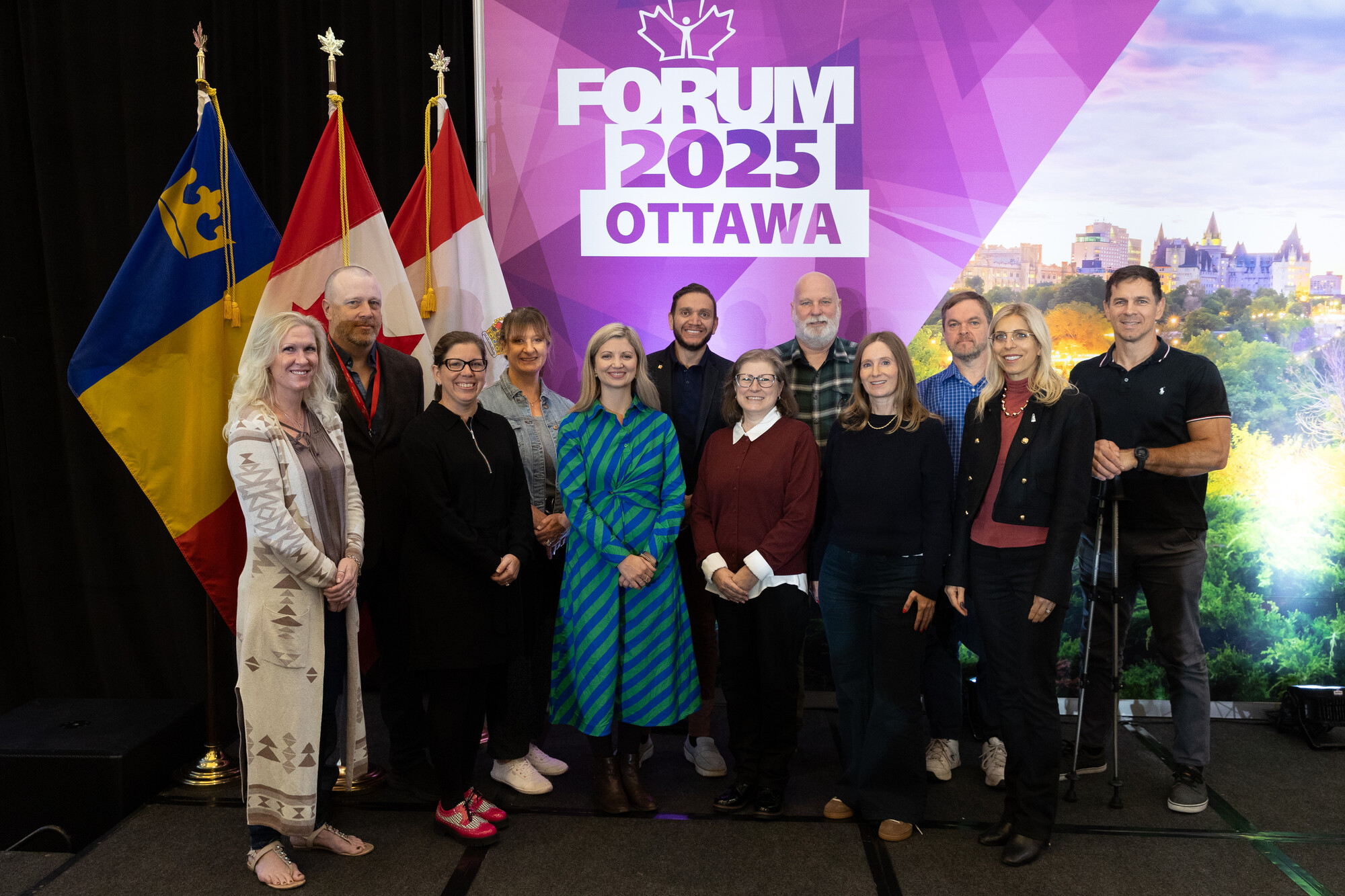
As if she had spoken it into existence, Sarah returned to CIMVHR Forum in 2025, not as an audience member but as a co-presenter, sharing research on the experiences of women in the RCMP. Her participation was made possible through the Atlas Institute’s travel grant program, which supports Veterans and Family members in attending conferences so they can bring lived experience directly into research conversations.
We connected with Sarah to learn more about her experience, the importance of lived experience in Veteran research and what sharing her story meant to her.
What interested you in participating in CIMVHR Forum 2025?
I attended CIMVHR Forum for the first time in 2023 and it was such an incredible experience. It filled my cup with both research and academic content that I enjoy and it was a great opportunity to network with other Veterans. It also gave me a chance to see how this already amazing Forum could be made even better for Veterans like myself.
I noticed at the 2023 Forum that there wasn’t a lot of lived experience represented among presenters or even in the audience, which felt like a missed opportunity. There is so much knowledge to be shared between researchers and lived experience participants when both groups come together. It’s also important to acknowledge that these roles often overlap. Many people, myself included, are both researchers and individuals with lived experience. To me, that intersection is where the strongest and most impactful research can happen.
Sitting in the audience back in 2023, we talked about how awesome it would be to someday come back and present our research on the Athena Project. It was like a full-circle moment to be able to do exactly that at the 2025 Forum. It was another incredible experience. I also noticed some of the feedback I had shared with CIMVHR about improving the Veteran experience had been incorporated. Seeing that was really meaningful and I truly think it made the Forum even better this year.
What is it about Veteran research that interests you and why do you think it’s important?
Veterans’ experiences are shaped by unique organizational structures, cultures and roles within the Canadian Armed Forces (CAF) and RCMP. When research helps providers understand those contexts and the needs that arise from them, care can be more effective and genuinely person-centred.
A dedicated forum for Veteran research plays an important role in building that understanding. It helps clinicians and systems move from learning about service environments to understanding how those experiences have affected the individual Veteran, so treatment can focus on impact, meaning and recovery.
Why do you think it’s important for Veterans to be involved in research that relates to them?
In Veteran health research — and honestly in research involving any population — I really believe in the “nothing about us without us” philosophy. I think that if you’re studying a group of people, they should be the central people at that table. People with lived experience, regardless of the topic, bring such unique knowledge, richness and perspectives that can’t be learned through academia or reading studies. They often help shape better research questions by identifying gaps or nuances that researchers may not see. In qualitative work, lived experience can make questions more meaningful, grounded and relevant. It also helps with recruitment, interpretation of results and knowledge mobilization. Too often, research is completed and then people move on to the next study. What’s missing is that final step: how the findings are used to create impact or inform systems. That’s where lived experience can be especially powerful, helping ensure the research actually leads to change.
I think that if you’re studying a group of people, they should be the central people at that table. People with lived experience, regardless of the topic, bring such unique knowledge, richness and perspectives that can’t be learned through academia or reading studies.
What would you say to Veterans and Family members who are interested in getting involved in research?
Don’t be afraid of getting involved. Reach out to researchers and start the conversation. Sometimes it takes a bit of advocacy and patience, especially with those who haven’t worked with Veterans before, but it’s worth it. Atlas has already done so much in this space through the Athena Project, though others may still be a bit hesitant.
My advice to other Veterans is not to lose hope or give up. In my experience, once you find allies in the research community and they begin to involve you, there’s a shared appreciation for the value of lived experience and there’s no longer a need to make the case. They simply start to understand how beneficial it is. And if you do encounter resistance, it’s probably not a group that’s leaning into best practices anyway. There are many great research teams out there who would genuinely welcome your participation.
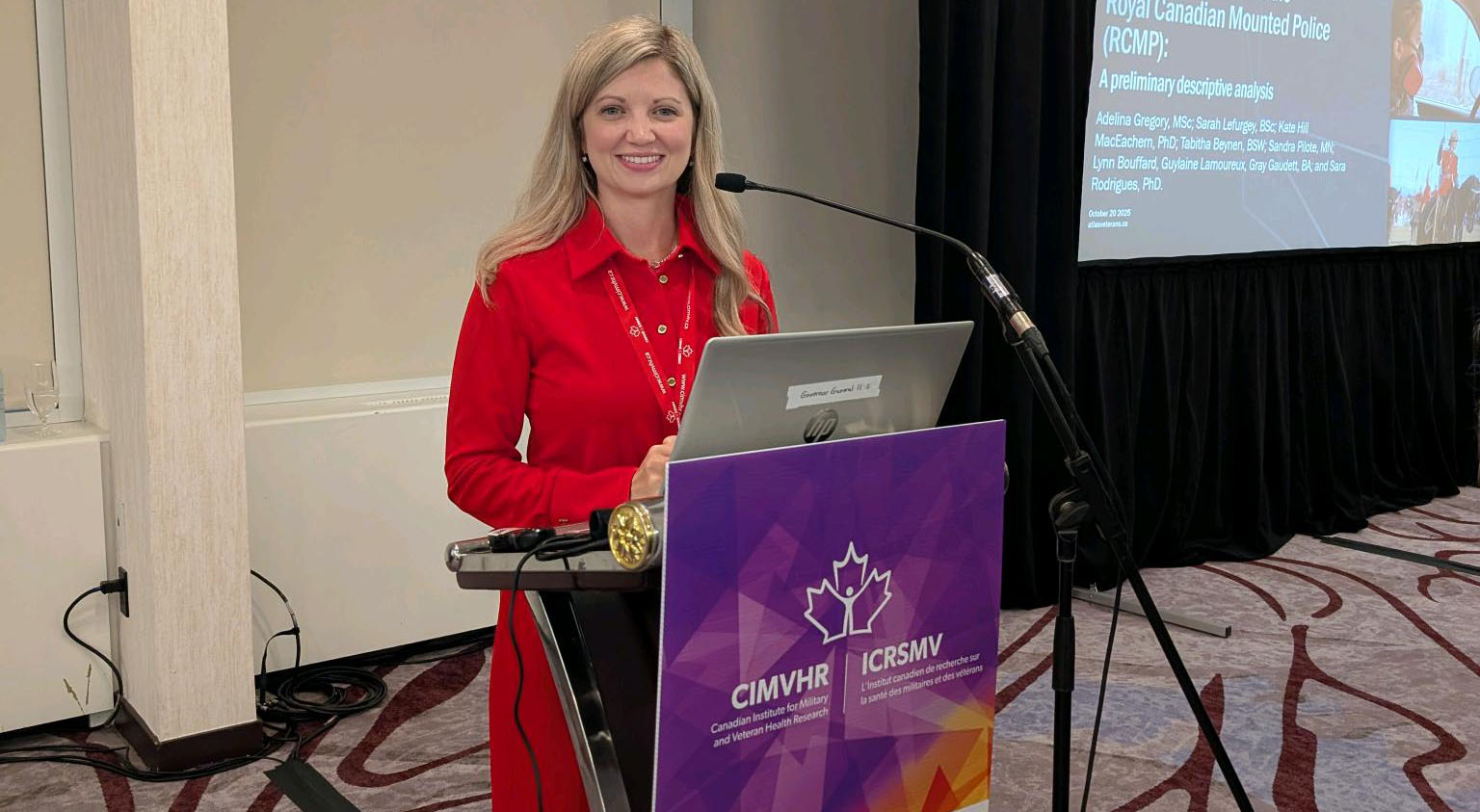
How was the experience of presenting at CIMVHR Forum 2025?
It was incredible! When I attended CIMVHR in 2023, I was completely in awe of every presentation. I filled a notebook with so many takeaways. I looked at these people at the podium and just thought, “Oh my goodness, you’re just incredible and you have so much knowledge to share!” So to be asked to speak at CIMVHR Forum 2025, to stand at that same podium two years later… it was such an unbelievable full-circle moment. I really felt a sense of belonging, knowing that the work I had done since 2023 and in advocating for more lived experience voices had led to that moment.
It was also really meaningful to present on one of the first studies focused on women’s experiences in the RCMP. I was proud of the work itself and proud that Atlas recognized the importance of bringing attention to the experiences of women in the RCMP, an area that still doesn’t get the attention it deserves.
What would you say was your biggest takeaway from being a CIMVHR Forum travel grant recipient?
This probably sounds a bit cheesy, but it really feels like coming home. This time at CIMVHR Forum, I knew so many people because of going to CIMVHR Forum in 2023 and from the work I’ve been doing since then. The community is such a special and unique one… people are so generous with their time and there’s this energy that’s just so supportive. When people ask me, “How was your week in Ottawa?” my response is always the same: These are my people. This is a space where everyone is there to learn, share and support one another. And I feel that energy every time I am around Veterans, both CAF and RCMP alike.
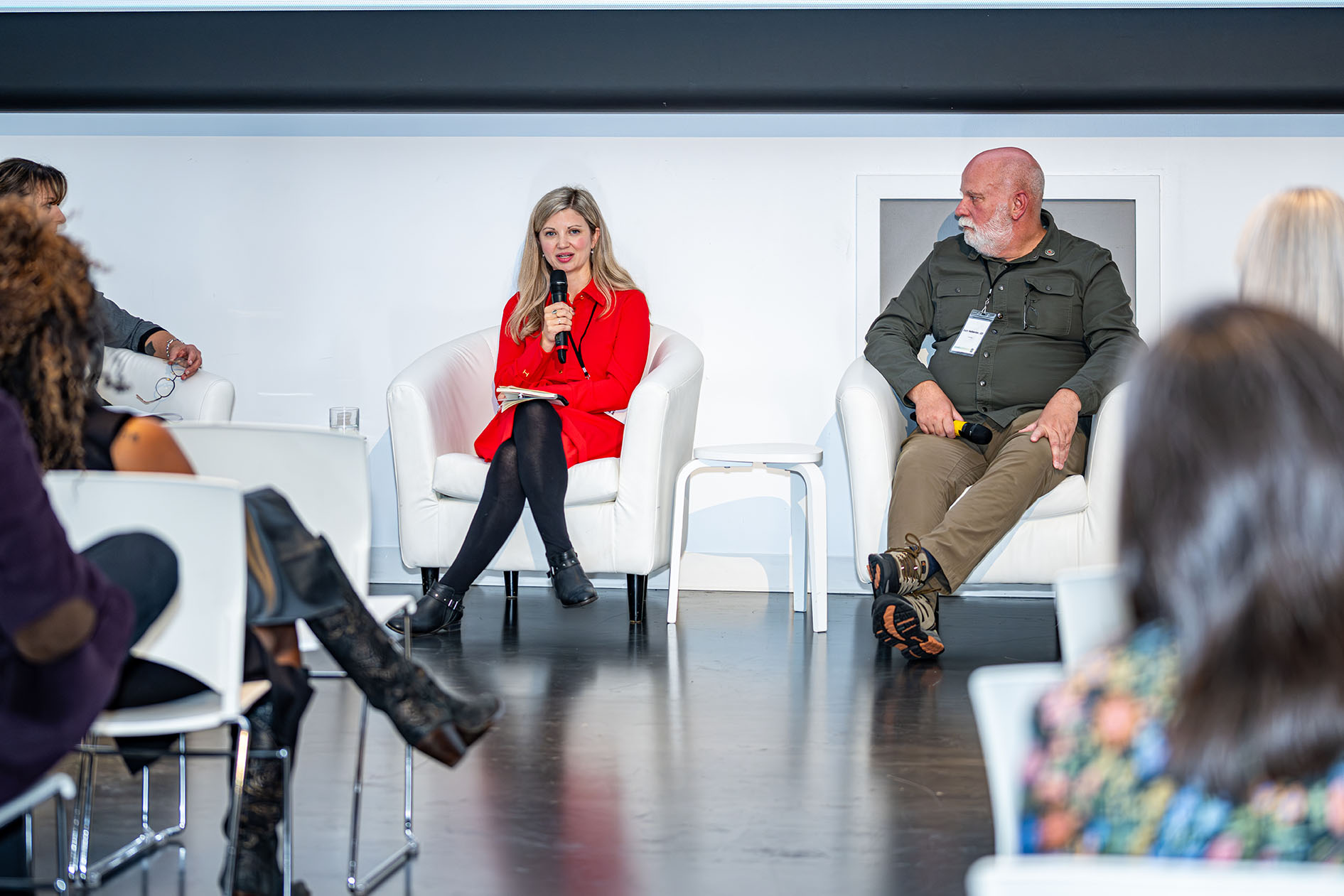
You were also invited to be a part of a lived experience panel at an Atlas event that same week and jumped in at the last minute when one of the panellists wasn’t able to participate. How was that experience for you?
It was one of those pivotal moments that I know I’ll look back on as a turning point. If someone had asked me in advance, “Hey, do you want to do a panel?” I probably would have hesitated, wondering if I was ready, if I’d be too anxious, if I belonged or if I’d do a good job. But because it was last-minute, I didn’t have time to talk myself out of it. That pushed me to step outside my comfort zone and share parts of my story.
The feedback afterward was overwhelming in the best way. People shared that they had learned something and there was a lot of appreciation and kind words. One of the things I value most about the Veteran community is the sense of openness that comes from shared experiences. That common ground often creates space for deeper, more meaningful conversations.
Those shared experiences push us to wrestle with who we are, where we’ve been and where we’re going. We face difficult things honestly and, in doing so, get to know ourselves in a deeper way. I’ve learned that sharing these experiences with one another is what leads to the strongest connections.
Those shared experiences push us to wrestle with who we are, where we’ve been and where we’re going. We face difficult things honestly and, in doing so, get to know ourselves in a deeper way. I’ve learned that sharing these experiences with one another is what leads to the strongest connections. At least, that’s been my experience.
When I left the RCMP in 2020, I left not wanting anybody to know about parts of my story and it gave me anxiety to think about sharing them. It felt like I was this “other” and it was something to hide and something people wouldn’t understand. And that’s the beautiful thing about places like CIMVHR Forum and groups like Atlas… when you’re around like-minded people with shared experiences, you realize you’re not alone. You get this sense of safety and you realize that “courage is courageous.” There’s power in storytelling for yourself and for others.
— Corporal (Ret’d) Sarah Lefurgey
Corporal (Ret’d) Sarah Lefurgey joined the RCMP in 2009 and was a specialized investigator of crimes against children. Sarah was promoted to the supervisor of a Major Crimes Unit before resigning in 2020. She is a member of the Women Veterans Council and the Athena Project Working Group.
Are you a Veteran or Family member with a story to tell? Get in touch with us and you may be featured on this blog!
You may also like...