Overview
Researchers are increasingly seeking to integrate lived experience into studies pertaining to Veteran and Family well-being, as Veterans’ and Family members’ valuable insights often help to enrich research. To help the community build their skills and comfort with research so they can contribute more effectively, the Atlas Institute for Veterans and Families is offering a free research training program designed to equip Veterans and their Families with the research knowledge and skills they need to collaborate and advise on studies, from study development to sharing findings.
Based on community feedback, this flexible program offers two different ways to participate — a workshop series and a nine-week online course.
Workshop series
Composed of four online workshops taking place between October 2025 and March 2026, these introductory sessions will build awareness of how research is conducted, increase understanding of the importance of integrating lived experience into research, familiarize you with current and key findings in Veteran and Family well-being research, encourage conversation about research between people with lived experience.
- Wednesday, October 15, 2025, 5 – 6:30 p.m., Eastern time
- Wednesday, November 26, 2025, 5 – 6:30 p.m., Eastern time
- Wednesday, January 28, 2026, 5 – 6:30 p.m., Eastern time
- Wednesday, March 4, 2026, 5 – 6:30 p.m., Eastern time
There will be four (4) workshops held via Zoom.
- While it is strongly encouraged, it is not mandatory to attend all four workshops.
The expression of interest period has closed. We thank you for your interest in the Veteran and Family research training workshop. Keep up with Atlas through our social channels and mailing list to be notified of future offerings.
Online course
This course includes both self-directed and live trainings for nine weeks between January and March 2026. It is designed to equip you with a strong understanding of key research concepts, build your capacity for engaging with academic and peer-reviewed literature, empower you to formulate meaningful research questions, explore effective strategies for knowledge sharing and help you confidently navigate your role within peer and community research contexts. You will also be invited to optionally participate in a study about its impact.
- Module 1
- Self-paced course work: Week of January 26, 2026
- Live class: Monday, February 2, 2026, 5 – 6:30 p.m., Eastern time
- Module 2
- Self-paced course work: Week of February 9, 2026
- Live class: Tuesday, February 17, 2026, 5 – 6:30 p.m., Eastern time
- Module 3
- Self-paced course work: Week of February 23, 2026
- Live class: Monday, March 2, 2026, 5 – 6:30 p.m., Eastern time
- Module 4
- Self-paced course work: Week of March 9, 2026
- Live class: Monday, March 16, 2026, 5 – 6:30 p.m., Eastern time
- Module 5
- Self-paced course work: Week of March 23, 2026
- Live class: Monday, March 30, 2026, 5 – 6:30 p.m., Eastern time
- Five (5) live classes held via Zoom
- Five weeks of independent self-paced course work ahead of each live class
- Use of Moodle, a virtual learning platform, to access course information and instructions, scheduling information, discussion forums, videos and course materials
- Regular readings
- Regular assignments
- Optional participation in a study about the course’s impact
The expression of interest period has closed. We thank you for your interest in the Veteran and Family research training course. Keep up with Atlas through our social channels and mailing list to be notified of future offerings.
If you have been offered a space in the course and will no longer be taking the training, please contact us as soon as possible at researchtraining.atlas@theroyal.ca so that we can open up your spot for another participant.
Colleen Reid, PhD
Colleen Reid, PhD, is a research consultant who holds a faculty position at Douglas College and adjunct professor positions at Dalhousie University and the University of British Columbia. For over 25 years, Colleen has engaged in community-based participatory research projects focused on health, well-being and social justice for vulnerable groups. She is committed to using participatory and arts-based approaches to enable the voices, stories and wisdom of lived experience to shape the direction and outcomes of research.
Connie Uetz
Connie Uetz served in the Primary Reserve from 1987 until her release in 2013 as a Sergeant. She spent her career as a Resource Management Support Clerk, Recruiter and Military Career Counsellor, and as a Tactical Civil-Military Cooperation Operator on two tours in Afghanistan. Connie joined Atlas in September 2024 as a Peer Researcher with the Research Training Program where she has been able to grow and share her love of research and it’s benefits to the Veteran and Family community.
This training is intended for Veterans of the Canadian Armed Forces and the Royal Canadian Mounted Police and Veteran Family members.
To be eligible for the training program, you must:
- Be over the age of 18
- Be comfortable communicating in English
- Live in Canada
- Be a Veteran of the Canadian Armed Forces or Royal Canadian Mounted Police (per Veterans Affairs Canada’s definition) OR a Family member* of a Veteran
*Atlas defines Veteran Family as parents, siblings, partners/spouses, dependent and adult children, as well as carers (related or not), friends and peers, taking into account who the Veteran identifies as significant to their mental well-being.
This training is offered at no cost to Veterans and their Families.
Spaces will be offered on a first-come, first-served basis to those who meet the eligibility criteria. We encourage applications from members of groups with historical and/or current barriers to equity. Atlas is attentive to the diversity of our network and welcomes expressions of interest from those who self-identify as women, persons with a disability/ies, First Nations, Inuit and Métis Peoples and all other Indigenous Peoples, racialized and/or 2SLGBTQIA+.
Atlas is committed to providing an accessible environment for participants in the trainings we offer. Part of this commitment is ensuring that material is compliant with Web Content Accessibility Guidelines (WCAG).
Overview
The Atlas Institute is offering a two-part training on prolonged exposure (PE) therapy for posttraumatic stress disorder (PTSD) to licensed/registered service providers (and their trainees) working in mental health who care for Veterans or Veteran Families in Canada. The cost for this training is covered by the Atlas Institute for eligible service providers who register and are approved (see details in Training fees).
This two-part training includes:
- Part 1: Workshop on PE for PTSD (4 days)
- Part 2: Regular group consultations with an expert in PE (12 weeks; more info)
Continue reading to learn more about the workshop, including how to register!
Registration for this training is now full and the waitlist is closed.
About prolonged exposure therapy (PE)
Prolonged exposure (PE) therapy is an evidence-based therapy that is recommended as a first-line treatment for PTSD in international treatment guidelines, such as the National Institute for Health and Care Excellence (NICE) Guideline (2018) and the American Psychological Association (APA) Clinical Practice Guidelines for the Treatment of PTSD (2017).
For more information about PE, please visit the website for the Center for the Treatment and Study of Anxiety at the University of Pennsylvania’s Perelman School of Medicine.
You can also visit our webpage or listen to our podcast episode that explains the basics of PE, both created for Veterans and their Families who want to learn more about PE and what to expect during treatment.
Training fees
The Atlas Institute is covering the cost of the PE for PTSD workshop for approved registrants. There will be no cost to participants, subject to eligibility.
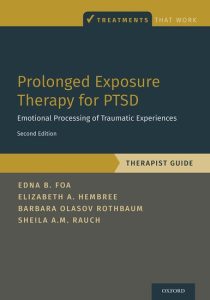 While we are covering the cost of the training, participants are required to purchase a copy of the PE therapist guide (available for purchase through Oxford University Press and other retailers).
Prolonged Exposure Therapy for PTSD: Emotional Processing of Traumatic Experiences
Second Edition
By Edna B. Foa, Elizabeth A. Hembree, Barbara Olasov Rothbaum and Sheila A.M. Rauch
ISBN 978-0-19-092693-9
Workshop details
This workshop is endorsed by the Center for the Treatment and Study of Anxiety (CTSA) at the University of Pennsylvania’s Perelman School of Medicine. This four-day training is part of the certification process as a PE provider.
If you are selected to participate, you can expect to attend four days of training for eight hours each day.
Dates: Monday, March 9, 2026 – Thursday, March 12, 2026
Time: 9 a.m.–5 p.m., Mountain time
Delivery: Online via Zoom for Healthcare
Language: English
In this workshop, you can expect to:
- Describe the diagnosis and psychopathology of PTSD
- Discuss emotional processing theory as it relates to PE for PTSD
- Discuss empirically supported, psychotherapeutic treatments for chronic PTSD and the comparative efficacy of these treatment approaches
- Explain how clients can be helped to emotionally engage in and process traumatic memories, with the aim of reducing trauma-related symptoms and difficulties
- Implement psychoeducational treatment components of PE for PTSD
- Construct an in-vivo exposure hierarchy that includes a range of situations that safely and effectively promote learning while expanding the client’s world
- Implement in-vivo exposure to safe but avoided trauma reminders with clients
- Help clients choose an appropriate index trauma on which to focus in PE for PTSD
- Conduct imaginal exposure to memories of traumatic events
- Choose hot spots with clients and implement hot spots procedures in imaginal exposure
- Identify and address avoidance in PE sessions
- Identify and address over- and under-engagement in imaginal exposure
This workshop will be delivered via Zoom for Healthcare. You will receive an invitation with instructions prior to the workshop.
Please ensure that you have a stable Internet connection (broadband wired or wireless — 3G or 4G/LTE), speakers and microphone (built-in or USB plug-in or wireless Bluetooth). To ensure connectivity, please ensure your Zoom App is up-to-date. If you have an older version of Zoom, it may not be compatible. You can download the latest version here.
The maximum capacity for the workshop is 30 participants.
 The Centre for Posttraumatic Stress & Anxiety Treatment, Ltd. (David Paul, PhD) is approved by the Canadian Psychological Association to offer continuing education for psychologists. The Centre for Posttraumatic Stress & Anxiety Treatment, Ltd. (David Paul, PhD) maintains responsibility for the program. For other licensed professionals, please check with your licensing board to determine acceptability of CPA Continuing Education (CE) credits for this learning activity.
Completion of the entire Four-Day Prolonged Exposure Therapy Workshop will earn participants 25 CE credits. Credit for partial completion is not available. CE certificates will be provided to eligible participants on their completion of a workshop evaluation.
For this workshop, you will receive a certificate from the CTSA. Your certificate will become available to you after you have completed the workshop evaluation.
This four-day intensive workshop in PE conducted by CTSA certified trainers is part of the certification process as a PE provider. For more information on becoming a certified PE provider, please visit the CTSA website.
Note: The CPA’s approval of an individual, group, or organization as a CE Sponsor or Provider is restricted to the activities described in the approved application or annual report form. The CPA’s approval does not extend to any other CE activity the Sponsor or Provider might offer. In granting its approval, the CPA assumes no legal or financial obligations to Sponsors, Providers, or to those individuals who might participate in a Sponsor or Provider’s CE activities or programs. Further, responsibility for the content, provision, and delivery of any CE activity approved by the CPA remains that of the CE Sponsor or Provider. The CPA disclaims all legal liability associated with the content, provision, and delivery of the approved CE activity.
All times are listed in Mountain time.
Day 1 — March 9, 2026
| 8:45–9 a.m. | Sign-in |
| 9 a.m. –12:30 p.m. | PE therapy for PTSD
(break as needed, approximately 10–10:15 a.m.) |
| 12:30–1:30 p.m. | Lunch break |
| 1:30–3:15 p.m. | Overview of PE therapy
Description of PE/overview of sessions 1–10 |
| 3:15–3:30 p.m. | Break |
| 3:30–5 p.m. | PE therapy program
|
Day 2 — March 10, 2026
| 8:45–9 a.m. | Sign-in |
| 9–10 a.m. | Break into pairs to practise delivery of treatment overview/rationale |
| 10–10:45 a.m. | Session 1: Trauma interview and breathing retraining
Session 2: Psychoeducation |
| 10:45–11 a.m. | Break |
| 11 a.m. – 12:30 p.m. | Session 2: In vivo exposure
|
| 12:30–1:30 p.m. | Lunch break |
| 1:30–2:30 p.m. | Break into pairs to practise rationale and procedure for in vivo exposure and hierarchy construction |
| 2:30–3:15 p.m. | Session 3: Imaginal exposure I
|
| 3:15–3:30 p.m. | Break |
| 3:30–5 p.m. | Session 3: Imaginal exposure II
|
Day 3 — March 11, 2026
| 8:45–9 a.m. | Sign-in |
| 9–10 a.m. | Session 3: Imaginal exposure III
|
| 10–11 a.m. | Break into pairs to practise delivery of imaginal exposure rationale and procedure |
| 11–11:15 a.m. | Break |
| 11:15 a.m.–12 p.m. | Sessions 4 and 5: Therapist self-care |
| 12–12:30 p.m. | Session 6-9: Hot spots procedure for imaginal exposure |
| 12:30–1:30 p.m. | Lunch break |
| 1:30–2:15 p.m. | Session 6–9: Hot spots procedure for imaginal exposure (continued) |
| 2:15–2:45 p.m. | Session 10: Final session
|
| 2:45–3:15 p.m. | Factors that impair effective emotional engagement in exposure: Avoidance
|
| 3:15–3:30 p.m. | Break |
| 3:30–5 p.m. | Factors that impair effective emotional engagement in exposure: Avoidance (continued) |
Day 4 — March 12, 2026
| 8:45–9 a.m. | Sign-in |
| 8:45–10:30 a.m. | Factors that impair effective emotional engagement in exposure: Under-engagement |
| 10:30–10:45 a.m. | Break |
| 10:45 a.m.–12:30 p.m. | Factors that impair effective emotional engagement in exposure: Over-engagement |
| 12:30–1:30 p.m. | Lunch break |
| 1:30–2:15 p.m. | Special issues: Maintaining focus on PTSD, homework compliance |
| 2:15–3 p.m. | Review of treatment/forms |
| 3–3:15 p.m. | Break |
| 3:15–4 p.m. | Discussion period and Q&A |
Participants must agree to the following terms and conditions prior to the workshop:
- You will inform the training organizers immediately if you no longer plan to attend the workshop. Failure to do so may affect eligibility for future trainings offered through the Atlas Institute.
- Your video camera will remain on during the entire workshop.
- No more than two hours of the four-day workshop can be missed.
- You are expected to maintain the professional environment for the workshop (e.g. ensure caregiving arrangements are in place for children).
- You will be present for the breakout sessions at the times outlined in the agenda.
- You will receive your certificate from the CTSA upon completion of the workshop evaluation.
About the trainers
 Dr. David Paul is a Registered Psychologist and Co-Director of the Centre for Posttraumatic Stress & Anxiety Treatment in Edmonton, Alta. He previously worked as Clinical Coordinator at the Veterans Affairs Canada Operational Stress Injury Clinic in Edmonton from 2009 to 2012, and as a Clinical Psychologist with the Department of National Defence between 2013 and 2018. Dr. Paul’s primary clinical focus is the treatment of PTSD using empirically validated cognitive behavioural therapies. He is certified as a PE Therapist, Consultant and Trainer by the Center for the Treatment and Study of Anxiety at the University of Pennsylvania’s Perelman School of Medicine.
Eligibility requirements
This training is intended for licensed/registered service providers working in mental health who care for Veterans or Veteran Families in Canada. Trainees working under a licensed/registered service provider in Canada are also eligible to apply.
Because of the advanced nature of this workshop and the limited enrolment, participants should have prior experience treating survivors of trauma. It is not intended for those with a general interest. Previous training and experience with cognitive-behavioural therapy (CBT) is strongly recommended.
To be eligible, you must:
- Provide care to Veterans or Veteran Families (Veterans from the Canadian Armed Forces and former Royal Canadian Mounted Police [RCMP] members).
- You must have a Veteran in your current caseload.
- The insurance provider your client uses is not a determining factor for eligibility (e.g. Veterans can use their own private insurance or insurance through Veterans Affairs Canada).
- Service providers who only care for active military or RCMP members are not eligible. Clients that are transitioning out of the military but are still currently an active member do not count towards the Veteran eligibility requirement.
- Be a licensed/registered service provider working in mental health or a licensed/registered service provider in supervised practice with liability insurance and working in mental health.
- Your licence needs to include psychotherapy in your scope of practice.
- Please note that regulatory bodies differ in each province and territory and the scope of practice and authorized client populations for each profession may vary as a result.
- For example: Counsellor, marriage and Family therapist, nurse practitioner, occupational therapist, physician, psychiatrist, psychologist, psychotherapist, registered nurse, registered psychiatric nurse, social worker. If you do not see yourself in this list, please contact us to see if you’re eligible.
- Belong to a professional organization with a code of ethics and that protects the public, OR be a graduate student who has completed their core graduate academic coursework and be in/has completed their practicum/internship portion of their graduate program. Graduate students must be on a licensing track and working under the supervision of a fully licensed mental health clinician.
- Be currently living and providing care in Canada.
- Be able to participate in the workshop in English.
We encourage applications from members of groups with historical and/or current barriers to equity. The Atlas Institute is attentive to the diversity of our network and invites you to self-identify during registration if you wish. Responses from applicants who self-identify during the registration process will only be shared with training organizers at the Atlas Institute. Groups include:
- First Nations, Métis and Inuit Peoples, and all other Indigenous Peoples
- Persons with visible and/or invisible (physical and/or mental) disabilities
- Member of a group(s) that commonly experience discrimination due to race, ancestry, colour, religion and/or spiritual beliefs, or place of origin
- Persons who identify as women
- Persons of marginalized sexual orientations, gender identities and gender expressions
The Atlas Institute is committed to providing an accessible environment for participants attending trainings. Part of this commitment includes offering supports such as American Sign Language (ASL) interpreters or captionists during the training.
Registration
Registration for this training is now full and the waitlist is closed.
To ensure a fair selection process, a lottery system will be used to fill the 30 spaces available for the workshop. The details are as follows:
- Applicants who register within the first 24 hours of the registration form opening will be entered into the lottery.
- The lottery will be open from 12 p.m., Eastern time on October 7, 2025 – 12 p.m., Eastern time on October 8, 2025.
- To support an inclusive training that values diversity, six spots are intentionally reserved for service providers who identify as a member of an equity-deserving group. To register for one of these spots, select the “Equity” stream when registering. You will still be entered in the “General” pool in addition to the “Equity” pool for the lottery.
- 24 “General” and 6 “Equity” applicants will be randomly selected from the lottery pool and offered spaces in the workshop.
- You will be notified by email within approximately 10 business days whether your registration has been accepted or if you have been placed on the waitlist.
- If your name is not drawn, you will be added to the waitlist in the order that you registered.
- If a spot becomes available, it will be offered to the next applicant on the waitlist.
- Should an equity spot become available, the spot will be filled by a service provider who identifies as a member of an equity-deserving group. The applicant will also be added to the general waitlist. The applicant will be offered whichever spot opens up first, in the order that they joined the waitlist.
Registration for the group consultations will open after the workshop is complete. Visit the event page for more information on group consultations.
Overview
The Atlas Institute is offering a two-part training on prolonged exposure (PE) therapy for posttraumatic stress disorder (PTSD) to licensed/registered service providers (and their trainees) working in mental health who care for Veterans or Veteran Families in Canada. The cost for this training is covered by the Atlas Institute for eligible service providers who register and are approved (see details in Training fees).
This two-part training includes:
- Part 1: Workshop on PE for PTSD (4 days; more information)
- Part 2: Regular group consultations with an expert in PE (12 weeks)
Continue reading to learn more about group consultations, including how to register!
Registration for this training is now full and the waitlist is closed.
About prolonged exposure therapy (PE)
Prolonged exposure (PE) therapy is an evidence-based therapy that is recommended as a first-line treatment for PTSD in international treatment guidelines, such as the National Institute for Health and Care Excellence (NICE) Guideline (2018) and the American Psychological Association (APA) Clinical Practice Guidelines for the Treatment of PTSD (2017).
Evidence supports the addition of consultation as a part of training. Training has shown to be more effective at improving competence and application of therapies when consultation is included as part of the training program.
For more information about PE therapy, please visit the website for the Center for the Treatment and Study of Anxiety (CTSA) at the University of Pennsylvania’s Perelman School of Medicine.
You can also visit our webpage or listen to our podcast episode that explains the basics of PE, both created for Veterans and their Families who want to learn more about PE and what to expect during treatment.
Training fees
The Atlas Institute is covering the cost of the PE for PTSD group consultations for approved registrants. There will be no cost to participants, subject to eligibility.
Group consultation details
Group consultations will take place weekly via Zoom for Healthcare. Each consultation session is led by a certified PE Trainer. PE Trainers are licensed mental health clinicians certified as PE therapy trainers and have extensive experience supervising and training in PE therapy.
Group PE Group consultation structure:
- Number of sessions offered: 12
- Session duration: 90 minutes
- Frequency of sessions: Weekly
- Delivery method: Online via Zoom for Healthcare
- Language: English
Consultation groups will be hosted on Zoom for Healthcare. Participants will receive an invitation with instructions specific to your group prior to the first session.
Please ensure that you have a stable Internet connection (broadband wired or wireless — 3G or 4G/LTE), speakers and microphone (built-in or USB plug-in or wireless Bluetooth). To ensure connectivity, please ensure your Zoom App is up-to-date. If you have an older version of Zoom, it may not be compatible. You can download the latest version here.
There is space available for 20 participants.
Two consultation groups will be offered. Each group will have a maximum of 10 participants.
You will receive priority if you participated in the PE for PTSD workshop offered by the Atlas Institute in March 2026. However, your spot is not guaranteed as space is limited.
By joining a consultation group, selected participants will have the opportunity to present PTSD cases and receive expert feedback, consultation and support from a PE expert. You will also have the opportunity to discuss the appropriateness of PE for your PTSD cases.
These group consultations do not count towards requirements for the CTSA’s PE Therapist certification.
About the trainers
 Dr. David Paul is a Registered Psychologist and Co-Director of the Centre for Posttraumatic Stress & Anxiety Treatment in Edmonton, Alta. He previously worked as Clinical Coordinator at the Veterans Affairs Canada Operational Stress Injury Clinic in Edmonton from 2009 to 2012, and as a Clinical Psychologist with the Department of National Defence between 2013 and 2018. Dr. Paul’s primary clinical focus is the treatment of PTSD using empirically validated cognitive-behavioural therapies. He is certified as a PE Therapist, Consultant and Trainer by the Center for the Treatment and Study of Anxiety at the University of Pennsylvania’s Perelman School of Medicine.
Eligibility requirements
This training is intended for licensed/registered service providers working in mental health who care for Veterans or Veteran Families in Canada. Trainees working under a licensed/registered service provider in Canada are also eligible to apply.
Because of the advanced nature of group consultations and the limited enrolment, participants should have prior experience treating survivors of trauma. It is not intended for those with a general interest. Previous training and experience with cognitive behavioural therapy (CBT) is strongly recommended.
To be eligible, you must:
- Have completed the four-day workshop in PE for PTSD led by CTSA-certified PE Trainers.
- Be able to commit to attending sessions on a weekly basis for the duration of the group consultations.
- Provide care to Veterans or Veteran Families (Veterans from the Canadian Armed Forces and former Royal Canadian Mounted Police [RCMP] members).
- You must have a Veteran in your current caseload.
- The insurance provider your client uses is not a determining factor for eligibility (e.g. Veterans can use their own private insurance or insurance through Veterans Affairs Canada).
- Service providers who only care for active military or RCMP members are not eligible. Clients that are transitioning out of the military but are still currently an active member do not count towards the Veteran eligibility requirement.
- Have at least one active case or anticipate having an active case during the group consultation period.
- “Active cases” refers to having clients with PTSD for whom you are currently providing care.
- Be a licensed/registered service provider working in mental health or a licensed/registered service provider in supervised practice with liability insurance and working in mental health.
- Your licence needs to include psychotherapy in your scope of practice.
- Please note that regulatory bodies differ in each province and territory and the scope of practice and authorized client populations for each profession may vary as a result.
- For example: Counsellor, marriage and Family therapist, nurse practitioner, occupational therapist, physician, psychiatrist, psychologist, psychotherapist, registered nurse, registered psychiatric nurse, social worker. If you do not see yourself in this list, please contact us to see if you’re eligible.
- Belong to a professional organization with a code of ethics and that protects the public, OR be a graduate student who has completed their core graduate academic coursework and be in/has completed their practicum/internship portion of their graduate program. Graduate students must be on a licensing track and working under the supervision of a fully licensed mental health clinician.
- Be currently living and providing care in Canada.
- Be able to participate in the group consultations in English.
We encourage applications from members of groups with historical and/or current barriers to equity. The Atlas Institute is attentive to the diversity of our network and invites you to self-identify during registration if you wish. Responses from applicants who self-identify during the registration process will only be shared with training organizers at the Atlas Institute. Groups include:
- First Nations, Métis and Inuit Peoples, and all other Indigenous Peoples
- Persons with visible and/or invisible (physical and/or mental) disabilities
- Member of a group(s) that commonly experience discrimination due to race, ancestry, colour, religion and/or spiritual beliefs, or place of origin
- Persons who identify as women
- Persons of marginalized sexual orientations, gender identities, and gender expressions
The Atlas Institute is committed to supporting an accessible environment for participants attending trainings offered through the Atlas Institute. Part of this commitment includes providing supports such as American Sign Language (ASL) interpreters or captionists during the training.
Registration
Please complete the online form to register for group consultations with an expert in PE.
Registration for group consultation will open after the workshop is complete.
This opportunity is offered on a first-come, first-served basis. Participants who attended the PE for PTSD workshop offered by the Atlas Institute in March 2026 will be given priority. After you submit your registration form, you will be notified within 10 business days of your acceptance. Please do not make scheduling or other arrangements until you have received confirmation of your acceptance.
The Atlas Institute for Veterans and Families is offering basic training on eye movement desensitization and reprocessing (EMDR) to licensed/registered service providers working in mental health who care for Veterans and Veteran Families in Canada. The cost for this training is covered by the Atlas Institute for eligible service providers who register and are approved (see details in Training fees).
Continue reading to learn more about the training, including how to register.
Registration for this training is now full and the waitlist is closed.
About EMDR
EMDR is a recommended first-line therapy for PTSD in current treatment guidelines worldwide.
EMDR is a psychotherapy treatment that was originally designed to alleviate the distress associated with traumatic memories1,2. Shapiro3 suggests that EMDR facilitates the accessing and processing of traumatic memories to bring them to a healthy resolution. After successful treatment with EMDR, affective distress is relieved, negative beliefs are reformulated and physiological arousal is reduced. During EMDR the client attends to emotionally disturbing material in brief sequential doses while simultaneously focusing on an external bilateral stimulation, e.g. lateral eye movements, hand-tapping and audio stimulation4.
For more information about EMDR, please visit the EMDR International Association (EMDRIA)’s website.
Training fees
The Atlas Institute is covering the cost of the EMDR training for approved registrants. There will be no cost to participants, subject to eligibility.
If approved, you will be provided with the EMDR basic training e-manual as well as access to a pre-study course and materials. While Atlas is covering the cost of the training, participants are strongly encouraged to purchase and read the EMDR textbook prior to the training (available for purchase through Guilford Press and other retailers).
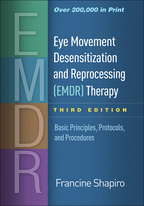 Eye Movement Desensitization and Reprocessing (EMDR) Therapy: Basic Principles, Protocols and Procedures. 3rd ed.
Published December 29, 2017
By Francine Shapiro
ISBN 9781462532766
Training details
Participants will learn to use EMDR appropriately and effectively in a variety of applications. Such use is based on understanding the theoretical basis of EMDR, safety issues, integration with an EMDR treatment plan, and supervised practice by experts in the field.
The course is designed to take place over several sessions to enhance learning and integration. EMDR basic training includes:
- 7-day EMDR clinical pre-study course (approximately 12 hours of coursework)
- EMDRIA-required curriculum content
- 14 hours of consultation with EMDRIA-approved consultants. Consultation over time allows trainees to practise what they have learnt and gain support as questions arise.
- Access to materials the trainer has found vital for new EMDR therapists working with clients experiencing complex trauma. Several other resources to supplement your EMDR and clinical practice will also be provided.
Please note: This training is comprehensive and requires your full participation and attention. It is strongly advised that you do not book clients in the evenings and take time to rest and refresh to optimize your learning. It is also strongly advised by the trainer that you take at least one day off after each session for self-care, rest and to optimize your understanding of the materials covered in the training.
- Pre-study (7 days, approximately 12 hours of coursework): One month prior to the first training session on November 14, 2025
- Introduction:
- November 14 – 15, 2025, 10 a.m. – 6 p.m., Eastern time
- Lectures and practica:
- November 21 – 22, 2025, 10 a.m. – 6 p.m., Eastern time (EMDR phases 1 and 2)
- January 9 – 10, 2026, 10 a.m. – 6 p.m., Eastern time (EMDR phases 3 to 6 and special populations)
- January 15 – 16, 2026, 10 a.m. – 6 p.m., Eastern time (special populations)
- January 17, 2026, 10 a.m. – 6 p.m., Eastern time (special populations)
- Group consultation:
- December 12, 2025, 11 a.m. – 1 p.m., Eastern time (EMDR phases 1 and 2)
- February 7, 2026, 11 a.m. – 3 p.m., Eastern time (EMDR phases 3 to 6)
- February 28, 2026, 11 a.m. – 3 p.m., Eastern time (EMDR phases 3 to 6)
- March 13, 2026, 11 a.m. – 3 p.m., Eastern time (EMDR phases 3 to 6)
Training participants will be required to attend every training session in its entirety including the two introductory sessions, the lectures and practica and group consultation sessions.
In this training you can expect to:
- Use the basic eight-phase EMDR protocol effectively and safely and adapt it to special situations and populations.
- Understand the research and theoretical positions on EMDR.
- Be familiar with variations on the basic protocol for special populations.
- Understand legal and ethical considerations in the use of EMDR.
This workshop will be delivered virtually. You will receive an invitation with instructions prior to the training.
Please ensure that you have a stable internet connection (broadband wired or wireless — 3G or 4G/LTE), speakers and microphone (built-in or USB plug-in or wireless Bluetooth). To ensure connectivity, please ensure your Zoom App is up-to-date. If you have an older version of Zoom, it may not be compatible. You can download the latest version here.
The Atlas Institute is covering the cost for 30 service providers to attend the EMDR basic training.
During the lecture portions of the basic training, you will be with a larger group of service providers who did not register for the training via the Atlas Institute’s website. Group consultation and practica will be held exclusively with the service providers who registered through the Atlas Institute.
This course is approved by EMDRIA. It follows EMDRIA’s currently recommended curriculum. The virtual training takes place over several sessions to enhance your learning and allow you to integrate the content into your practice with clients as you learn.
This course is approved for 124 continuing education credits (CEC) through the Canadian Counselling and Pychotherapy Association (CCPA).
A certificate of completion will be issued to all participants who have licensure and satisfactorily complete the entire training including the required readings, 10 consultation hours, EMDRIA exam (divided into multiple quizzes) and evaluations. The training must be completed in its entirety within one year of the first training session.
EMDRIA requires that all trainees be on camera and present the entire training to receive a certificate of completion. If you are away from any components of the training for more than 15 minutes, you will need to register for a future EMDR training at full cost to complete the course, as you will be taking a spot away from someone else who could have attended the training.
Prestudy (7 days)
The pre-study is an opportunity for you to learn more about trauma-informed practice, EMDR and EMDR research, psychometrics and history-taking techniques and some EMDR information that will help you prepare for the basic training. Depending on your level of familiarity with EMDR, expect the pre-study materials to take 10–15 hours to complete.
Understanding trauma is foundational to work in EMDR. For those who have taken extensive courses in trauma and trauma-informed care, you may only need to skim through pre-study day 1.
The online pre-study materials will be sent to participants on October 15, 2025.
- Pre-study day 1: Trauma-informed care
- Pre-study day 2: EMDR introduction and research
- Pre-study day 3: Psychometrics, history-taking and treatment planning intro
- Pre-study day 4: EMDR resources
- Pre-study day 5: Client self-regulation
- Pre-study day 6: Setting up for virtual training and practica
- Pre-study day 7: EMDR cultural competence and learning about microaggressions
Introduction
Meet the trainer in a casual setting online, meet other trainees and familiarize yourself with the Zoom online meeting platform while also learning EMDR virtual skills necessary for training.
This introductory session will give you an overview of the trainer, training, pre-study, online forum resources, consultation expectations, preparing your clients for EMDR, and trauma.
Lectures and practica
Phases 1, 2, 7 and 8 will cover information necessary for preparing your clients for EMDR trauma processing.
- EMDR history and research
- EMDR basic protocol: History, treatment planning, preparation, closure, re-evaluation
- Adaptive information processing
- Understanding and accessing the associative network
- Resource development and installation, resourcing, self-soothing strategies
Phases 3 – 6: These will cover special populations and information on work with uncomplicated posttraumatic stress disorder (PTSD) in most clients.
- EMDR basic protocol: Assessment, desensitization, installation, body scan
- Blocked processing, cognitive interweaves and titration strategies
- Special populations: Recent events and reverse protocols, children, pain, phobia, addiction, illness, grief, couples, self-use
- Practica components 1 – 4
- Overview strategies for dissociation and complex trauma
Group consultation
Includes 14 hours of group consultation with an EMDRIA-approved consultant.
Please take a moment to review the terms and conditions for the basic training in EMDR prior to registering. When you register for this training you acknowledge and agree to all course policies.
Participants must agree to the following:
- You will inform the organizers immediately if you are no longer able to attend the training. Failure to do so may affect eligibility for future trainings offered through the Atlas Institute.
- The deadline to withdraw from the training is October 10, 2025. Failure to do so may affect eligibility for future trainings offered through the Atlas Institute.
- Participation in the training in its entirety is required, including the pre-study materials, introduction, lectures, practica and group consultation. EMDRIA requires that all trainees are on camera for the entire training to receive a certificate of completion. If you are away from any components of the training for more than 15 minutes, you will need to register for a future EMDR training at full cost to complete the course.
- This training must be completed in its entirety by December 14, 2026.
- You must keep your web camera on during training sessions.
- A spirit of cooperation with the trainer and facilitators is required to enhance your learning of the eight phases of EMDR and the application of the standard basic protocol. Anyone who disrupts other trainees or the trainer will be asked to leave the training.
- Every qualified participant is welcome in this training. Discrimination, racism, oppression, harassment or any other forms of unprofessional behaviour will not be tolerated. If you experience any of these situations in the training, please inform the trainer immediately.
- Due to the experiential nature of this training, you will be required to complete a practica consent form and confidentiality agreement.
About the trainer
 Sue Genest, BA (Hons), MSc, CCC, RCC is a certified EMDR therapist, EMDRIA-approved consultant and EMDR training provider. She has been working in health care for over 33 years — 18 years in somatic therapy and 19 years in EMDR. She has also worked virtually with clients and consultees for 10 years.
She has specialized in trauma work using EMDR, Hakomi body psychotherapy and various methods to address the whole person [e.g. ego state therapy, advanced EMDR trainings, cognitive processing therapy (CPT), cognitive behavioural therapy (CBT), dialectical behaviour therapy (DBT), narrative, solution-focused, sensorimotor, theraplay, Shamanism, Indigenous teachings and mindfulness]. She works with individuals and groups addressing trauma, addictions, grief, anxiety, stress, depression, self-esteem, health and relationship issues. She has worked with a wide range of clients including individuals living with various mental health injuries (e.g. PTSD, depression, bipolar, schizophrenia), individuals with varying disabilities, minority groups (e.g. Indigenous Peoples, 2SLGBTQIA+ individuals, immigrants), correctional offenders, cancer patients, student populations and corporate professionals.
She is a Canadian Certified Counsellor and Registered Clinical Counsellor in British Columbia. She attended the University of Calgary where she received her BA (Hons) in Psychology and her MSc in Counselling Psychology. She has won numerous awards for her academic work and taught several university classes including counselling skills, lifespan development, mind/body/spirit medicine, qualitative research and sexuality. She has publications and presentations in the area of counselling, EMDR, pediatrics, qualitative research and sexuality.
Sue teaches both basic and advanced EMDR trainings in Canada and around the world.
Eligibility requirements
This training is intended for licensed/registered service providers working in mental health who care for Veterans or Veteran Families in Canada. Trainees working under a licensed/registered service provider in Canada are also eligible to apply. To be eligible, you must:
- Provide care to Veterans and Veteran Families [Veterans from the Canadian Armed Forces and former Royal Canadian Mounted Police (RCMP) members].
- You must have a Veteran in your current caseload.
- The insurance provider your client uses is not a determining factor for eligibility (e.g. Veterans can use their own private insurance or insurance through Veterans Affairs Canada).
- Service providers who only care for active military or RCMP members are not eligible. Clients that are transitioning out of the military but are still currently an active member do not count towards the Veteran eligibility requirement.
- Be a licensed/registered service provider working in mental health or a licensed/registered service provider in supervised practice with liability insurance and working in mental health. Your licence needs to include psychotherapy in your scope of practice.
- Please note that regulatory bodies differ in each province and territory and the scope of practice and authorized client populations for each profession may vary as a result.
- For example: Counsellor, marriage and Family therapist, nurse practitioner, occupational therapist, physician, psychiatrist, psychologist, psychotherapist, registered nurse, registered psychiatric nurse, social worker. If you do not see yourself in this list, please contact us to see if you’re eligible.
- Have a minimum of a master’s level education in a mental health discipline and belong to a professional organization with a code of ethics and that protects the public, OR be a graduate student who has completed their core graduate academic coursework and be in/has completed their practicum/internship portion of their graduate program. Graduate students must be on a licensing track and working under the supervision of a fully licensed mental health clinician.
- Your master’s or higher degree must be in an established mental health discipline from a university that is:
- a member of Universities Canada (formerly the Association of Universities and Colleges of Canada – AUCC); or
- from a university in the United States that is accredited by one of the six regional accrediting organizations recognized by the Council for Higher Education Accreditation (CHEA).
- Your master’s or higher degree must be in an established mental health discipline from a university that is:
- Have a minimum of eight clients or anticipate having eight clients prior to starting the training. Participants will be expected to apply their learning with at least eight clients who do not have complex trauma.
- Participants wil only be able to complete the EMDR training if they are able to practise EMDR with clients throughout the duration of their training. Please be sure you have enough clients who can shift states, self-soothe and have affect acceptance (know how to work with their emotions in positive ways) so you can practise EMDR with them. To complete the training, EMDRIA requires a minimum of 10 hours of consultation based on the integration of your learning with clients.
- Currently live and provide care in Canada.
- Be able to participate in the training in English.
All qualified participants are welcome in this training. Discrimination, racism, oppression, harassment or any other forms of unprofessional behaviour will not be tolerated. If you experience any of these situations in the training, please inform the instructor immediately.
We encourage applications from members of groups with historical and/or current barriers to equity. The Atlas Institute is attentive to the diversity of our network and invites you to self-identify during registration if you wish. Responses from applicants who self-identify during the registration process will only be shared with training organizers at the Atlas Institute. Groups include:
- First Nations, Métis and Inuit Peoples, and all other Indigenous Peoples
- Persons with visible and/or invisible (physical and/or mental) disabilities
- Member of a group(s) that commonly experience discrimination due to race, ancestry, colour, religion and/or spiritual beliefs or place of origin
- Persons who identify as women
- Persons of marginalized sexual orientations, gender identities and gender expressions
The Atlas Institute is committed to providing an accessible environment for participants attending trainings. Part of this commitment includes offering supports such as American Sign Language interpreters or captionists during the training.
Registration
Registration for this training is now full and the waitlist is closed.
This opportunity is offered on a first-come, first-served basis.
After you submit your registration form, you will be notified within approximately 10 business days whether your registration has been accepted. Please do not make scheduling or other arrangements until you have received confirmation of your acceptance.
To support an inclusive training that values diversity, six spots are intentionally reserved for service providers who identify as a member of an equity-deserving group. To register for one of these spots, select the “Equity” stream when registering.
Interested service providers must self-identify with one or more of the following groups:
- First Nations, Métis and Inuit Peoples, and all other Indigenous Peoples
- Persons with visible and/or invisible (physical and/or mental) disabilities
- Member of a group(s) that commonly experience discrimination due to race, ancestry, colour, religion and/or spiritual beliefs or place of origin
- Persons of marginalized sexual orientations, gender identities and gender expressions
- Shapiro, F. Efficacy of the eye movement desensitization procedure in the treatment of traumatic memories. Journal of Traumatic Stress. 1989;2(2):199-223.
- Shapiro, F. Eye movement desensitization: A new treatment for post-traumatic stress disorder. Journal of Behavior Therapy and Experimental Psychiatry. 1989;20(3):211-217.
- Shapiro, F.. Eye movement desensitization and reprocessing (EMDR): Basic principles, protocols, and procedures.2nd ed. Guilford Press; 2001.
- Shapiro, F. Eye movement desensitization and reprocessing: From EMD to EMDR/R – A new treatment model for anxiety and related traumata. The Behavior Therapist. 1991;14(5):133-135.
