
Consultations for clinicians
One-to-one guidance to enhance Veteran and Family care
Welcome to the Consultations for clinicians (CfC) program.
This pilot program provides mental health clinicians with one-to-one expert guidance at no cost about issues that may arise when supporting and treating Canadian Armed Forces (CAF) and Royal Canadian Mounted Police (RCMP) Veterans and/or their Families.
This tailored support complements other training and services provided by the Atlas Institute in its goal to enhance the care available to all Canadian Veterans and their Families affected by posttraumatic stress disorder (PTSD) and operational stress injuries, regardless of where they live.
The Atlas Institute is committed to providing an accessible environment for individuals participating in consultation.
If you have accessibility needs regarding the submission of any forms (e.g. registration, request) or in communicating with us, please notify us at implementation@atlasinstitute.ca or 613-722-6521 ext. 7203 and we will do our best to meet your needs.
How the program works
The program at a glance
- Consultations can be requested in English or French.
- They are available one-to-one and at no cost.
- Consultations occur via Zoom (calls or meetings) or email.
- They are available to eligible Canadian mental health clinicians (see Program eligibility for details).
-
Register
Register for the program
Fill out the program’s one-time registration form.
Receive your Atlas ID
Once your eligibility is confirmed, you’ll receive a unique Atlas ID and link to the request form.
-
Consult
Ask your questions as they arise
Use your Atlas ID and request form link. Select your preferred consultation format: email or Zoom.
Participate in your consultation
A consultant will reach out based on your selected format. Gain new insights and practical guidance!
-
Share
Share your feedback
Tell us about your consultation experience in the survey provided. All data will help inform the program’s progress and next steps.
Tell your colleagues about the program
Invite other health care providers to become more equipped to provide care to Veterans and Families.
What to expect after you submit a question
- After you submit a question, you’ll receive confirmation that your request is being reviewed. You will receive an update in 3–5 business days about next steps.
- The consultants will review the request and indicate if they are able to answer your question. This may depend on various factors including the consultation language requested, and the fit between the question and the consultants’ knowledge and expertise.
- If a consultant can answer your question, they’ll reach out to you via email.
- For an email consultation: They will respond to your question via the email address provided in your request form.
- For a Zoom consultation: They will provide a link to their availability for a Zoom call/meeting.
- Once you’ve indicated your preferred consultation time, you’ll receive an automated email with the Zoom link.
- On the scheduled date, participate in your consultation!
- The day after your consultation, you’ll receive a feedback survey about your experience. Your feedback will inform ongoing quality improvement and program evaluation.
If a consultant cannot answer your question, the Atlas team will let you know and if possible, provide alternate resources that may be helpful. Our team will track the questions that cannot be answered as part of our program evaluation.
Our consultation model
Recognizing there is a range of consultation models and approaches that clinicians may use, here’s a summary of what you can expect from the CfC program’s consultation model:
| What this consultation model offers | Important parameters to know |
|---|---|
| A one-to-one format that provides clinicians with tailored educational and informational guidance. | The consultation is non-supervisory and non-binding.
Clinicians assume sole responsibility for their client and decide if or how considerations discussed are implemented. |
| The opportunity for clinicians to ask questions as they arise in their care provision. | Using the program does not indicate an ongoing consultative relationship with the consultant. |
| An easy and efficient way to access an experienced colleague. | Consultations do not include clinical records or client-identifying information. |
| A chance to learn from someone outside of your clinical network (and potentially interprofessionally!). | Clinicians recognize that the consultants may be licensed in a different jurisdiction or come from a different professional background. |
For more details about the parameters, please visit the Program policies section to review policies including the terms of use and program participation agreement.
What you can ask about
Your question could be about a range of intersecting elements of clinical care provision. Here are a few examples:
- If a Veteran client has co-occurring severe depression and PTSD symptoms (including dissociative reactions), what treatment prioritization is recommended?
- I’m struggling to build trust with my clients who have experienced military sexual trauma (MST). Are there any changes to my approach you’d recommend (and would the approach differ based on gender)?
- What are effective interventions (or things to avoid) when helping a CAF/RCMP Veteran client process morally injurious events?
- A Veteran client is navigating a difficult post-service transition. What specific factors would be important to explore with them?
- How could a Veteran’s experience with hierarchy and authority be playing out in my work with them?
- A client who is a spouse of a Veteran is experiencing secondary traumatization from their partner’s symptoms. This is new to me and I would appreciate any insights on how to support this client.
- What psychoeducation is helpful to provide Family members when a Veteran is undergoing treatment for PTSD?
- Treatment progress has plateaued. Are there key Veteran and/or Veteran Family-specific considerations that I may have overlooked in my case conceptualization?
- I’ve started working with CAF Veteran clients who are from different service eras and/or different ages. Before this, I’d assumed that Veterans generally experienced similar things. What age or service era considerations could I keep in mind in my clinical work?
- An RCMP Veteran client is struggling with an unexpected medical release. How does that process typically work and how can I best support this client?
- A new CAF Veteran client shared about the long-lasting impacts the LGBT Purge has had on them. As a clinician who specializes in working with equity-deserving groups (women, Indigenous, racialized, 2SLGBTQIA+ etc.), are there any specific considerations I should know about that might make my approach different from my usual work?
- Are there resources/handouts available for Veteran and Family clients about suicide prevention?
- As I provide therapy, where can I learn more about working with a Veteran client who has a traumatic brain injury?
- How do I help a Veteran access VAC services and benefits?
- How do I become a VAC-approved provider?
- How do I refer a Veteran to residential treatment for PTSD or a local operational stress injury (OSI) clinic?
Meet the consultants and program advisor
Our consultants and program advisor are mental health clinicians who are experienced in providing care to Canadian Veterans and/or their Families and providing consultation to peers.
Consultants
Anne Bailliu, MSW, RSW, Psychotherapist
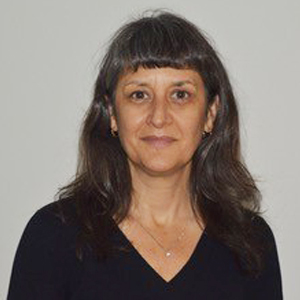 Anne provides psychotherapy to individuals diagnosed with a service-related OSI, such as PTSD, depression, moral injury or substance use. She specializes in the treatment of trauma related to military and policing.
Anne has been in private practice for 5 years and previously worked at the Royal Ottawa’s OSI Clinic for 13 years.
Her primary clinical focus is the treatment of PTSD using empirically validated cognitive-behavioural therapies. She is certified as a prolonged exposure (PE) therapist, supervisor and trainer by the Center for the Treatment and Study of Anxiety (CTSA) at the University of Pennsylvania. Also, she is a certified therapist for eye movement desensitization and reprocessing (EMDR), cognitive processing therapy (CPT), emotion-focused therapy (EFT) for both individuals and couples, and acceptance and commitment therapy (ACT).
Anne provides supervision and consultation to a range of health care providers, is a trainer for the CAF’s Road to Mental Readiness (R2MR) program and has taught in the counseling program at Saint Paul University Ottawa.
She is fluently bilingual.
What consultation means to Anne
Clinical consultation is an opportunity to provide support and guidance to health professionals. This may include case conceptualization, deepening proficiency in a specific therapeutic approach, or processing ethical issues.
David Paul, PhD, R. Psych, Registered Psychologist
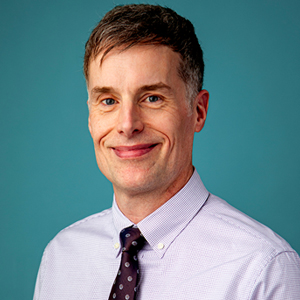 Dr. David Paul is a registered psychologist and Co-Director of the Centre for Posttraumatic Stress and Anxiety Treatment in Edmonton, Alberta. He has specialized in the treatment and assessment of trauma- and stressor-related disorders in military and public safety personnel since 2010, including in previous positions at the Edmonton OSI Clinic and the Operational Trauma and Stress Support Centre (OTSSC) at Canadian Forces Base Edmonton. Other areas of clinical focus include obsessive-compulsive disorder, anxiety, panic, worry, insomnia and depression.
Dr. Paul holds a doctoral degree in clinical psychology from McGill University and is certified as a therapist, consultant and trainer in PE therapy for PTSD by the CTSA.
What consultation means to David
Consultation is an opportunity for professionals to share knowledge about best practices in meeting the mental health care needs of Veterans and their Families. It is a forum for clinicians to collaborate, brainstorm solutions to challenges and build capacity in the places where Veterans and their Families actually access treatment.
Dr. Michele Todd, C. Psych, Clinical Psychologist
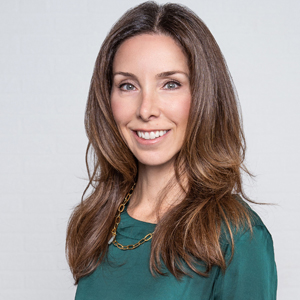 Dr. Michele Todd is a registered clinical psychologist in Ontario. Dr. Todd completed her PhD in Psychology at the University of Toronto, and residency in clinical psychology at St. Joseph’s Health Centre in Hamilton, ON. Dr. Todd has provided diagnostic assessment, individual and group therapy, clinical supervision, and professional consultation in evidence-based interventions since 2004 (e.g. PE, CPT, exposure and response prevention [EXRP], cognitive behavioural therapy [CBT] for mood and anxiety disorders, etc.), including for 13 years as a staff psychologist at an OSI clinic providing care for military Veterans and RCMP officers. She is a certified therapist, consultant and trainer in PE therapy for PTSD. Her areas of interest include increasing access to evidence-based interventions for individuals with trauma- and stressor-related disorders, anxiety disorders, and mood disorders, including through dissemination, training and professional consultation for providers.
What consultation means to Michele
I enjoy professional consultation for many reasons — it is an opportunity for colleagues to share challenges and learn from each other (regardless of who is providing or receiving consultation), and to maintain knowledge of the most up-to-date research to inform clinical care. Most importantly, consultation provides an opportunity for more clients to have access to evidence-based interventions, and therefore to have the best chance at recovery.
Program advisor
J Don Richardson, MD, FRCPC
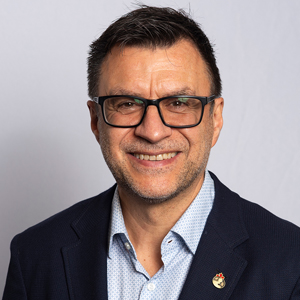 Dr. J. Don Richardson is a psychiatrist and clinician-researcher specializing in military, Veteran and occupational mental health. He serves as the Medical Advisor for the Atlas Institute for Veterans and Families and is Scientific Director of the MacDonald Franklin Operational Stress Injury Research Centre. He is also a consultant psychiatrist with the OSI clinic at St. Joseph’s Health Centre, Professor of Psychiatry at Western University, and holder of the Tanna Schulich Chair in Neuroscience and Mental Health. His research focuses on PTSD, moral injury, treatment-resistant PTSD, personalized medicine and measurement-based care. Dr. Richardson collaborates extensively with national and international military and Veteran health organizations, including NATO and Five Eyes partners, translating research evidence into improved clinical care, policy and supports for Veterans, military personnel, public safety personnel, and their Families across Canada.
What consultation means to Don
For me, consultation means creating a collaborative space where clinicians can reflect on complex cases, consider different perspectives, and identify practical, evidence-informed approaches to care. It is an opportunity to support clinicians, strengthen their confidence, and ultimately improve care for Veterans and their Families.
Program eligibility, policies, and evaluation
Program eligibility
Licensed/registered mental health clinicians (and those in supervised practice) working in Canada who currently or will provide care to Veterans (CAF/RCMP) and/or their Families can complete the program registration form. Your registration will be reviewed to confirm you meet the eligibility requirements and all applicants will be informed if their registration has or has not been approved.
Program policies
Cancellation/no-show policy — Learn about cancelling or missed consultation sessions.
Program terms of use — Know your responsibilities and the parameters of the program.
Program participation agreement — Understand the program’s parameters and recommended ways to participate.
Program privacy policy — Be informed about how your information is protected and used.
Program evaluation of the pilot
The Consultations for clinicians pilot program will last for approximately one year. This pilot will undergo a program evaluation to inform program scope and sustainability. In addition, we’ll make quality improvements over the course of the pilot where possible, so we welcome your participation and feedback in our surveys.
Registration
FAQs
I’m a student/trainee but not in supervised practice. Can I request a consultation/register for the program?
As a pilot, the program is solely for clinicians in training who are registered with a regulatory body. However, if your supervisor is licensed/registered and found to be eligible for this program, they are welcome to submit a question on your behalf.
I am a Veteran/Veteran Family member. Can I request a consultation about my own care?
Because the Atlas Institute is not a service provider and does not provide direct clinical care, the consultations offered are solely available to eligible clinicians.
When are consultants available? Do they have availability outside of business hours?
Consultants share their booking page with clinicians who request a Zoom-based consultation so the clinician can select which date/time works best for them. Consultation availability differs for each consultant, and the consultant may be in a different time zone than you so it’s possible consultations may be available outside of your time zone’s business hours.
Can I reach out to the consultant with a follow-up question after my consultation?
It’s possible to follow up after your initial consultation, but a consultant’s ability to do so may depend on demand. To provide as fair a process as possible, consultants will prioritize new consultation requests and accept follow-ups where possible. In either case, you’ll be notified.
Can I register for the program even if I don’t have a question at the moment?
Absolutely. The benefit of doing so is that you’ll have your eligibility confirmed ahead of time and already have access to the request form, if deemed eligible.
How will my information be used? Where can I find your program’s policies?
The program’s terms of use, program participation agreement and privacy policy can be found in the Program policies section on this webpage and on the registration form.
Can I ask questions about medications?
For the pilot phase, the program focuses on questions pertaining to psychotherapy. Recordings from a webinar series on the psychiatric management of PTSD are available for general information about medications used in PTSD treatment.
Can I get advice about my work with a specific client?
Questions can be asked about issues pertaining to client care but must align with the program’s terms of use and consultation model (e.g. it is essential that no client-identifying information or records are provided or discussed, clinicians understand that they are solely responsible for client care and if/how any consultation content is implemented, consultant guidance is solely informational and educational in nature, etc). Take time to review the terms of use and reach out if you have outstanding questions.
I received the booking link to schedule a Zoom consultation. How can I see the booking page in French?
On the booking page from the link the consultant provided, on the bottom of the middle of the screen, you’ll see “English” with an arrow beside it. Click on the language (not the arrow) to expand the menu and select “French.” Please note that Zoom’s scheduler offers limited translation functionality and so not all features will be translated.
Why are some automated emails or platform features (e.g. Zoom booking pages) not fully displayed in French?
Due to certain functional limitations, unfortunately some parts of the form and messages sent via the Zoom platform cannot be displayed in French. Thank you for your understanding.
Keep learning
There are various ways to continue enhancing your clinical knowledge and skills working with Veterans and Families:
- Our training webpage has information about our Evidence-Based Therapy for Veterans and Families Community of Practice (EBT4VaF CoP) as well as live and self-paced training opportunities.
- The Knowledge Hub and Topics webpages have resources for clinicians and Veteran and Family clients.
- Build your understanding by listening to voices of lived experience through our Mind Beyond the Mission podcast, Perspectives blog, digital storiesand Veteran Family Summit.
